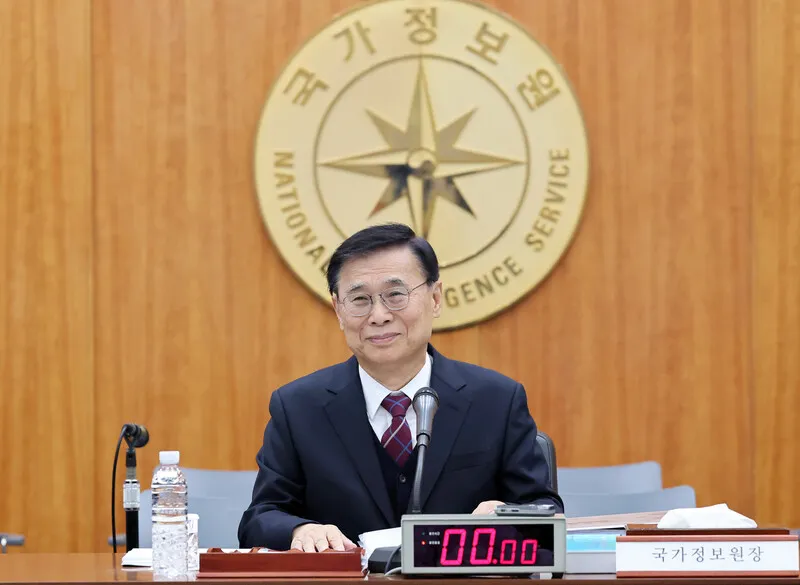
South Korea's National Intelligence Service (NIS) told the National Assembly's intelligence committee on Thursday that Kim Jong Un may have passed along North Korea's position on talks with the United States to Chinese leaders during his recent visit to China, according to 한겨레. The agency reported the assessment during a parliamentary audit session held at its headquarters in Seoul.
The NIS also said it believes Pyongyang is keeping open the possibility of a shift in the situation around the Asia-Pacific Economic Cooperation (APEC) summit, which is scheduled to take place in China in November, and is preparing for that scenario.
Why it matters
The briefing offers a rare public look at how South Korea's intelligence service reads Kim's movements at a moment when Washington and Pyongyang have not yet resumed contact. If the NIS reading is correct, the North Korean leader used a trip framed around a historical anniversary to open a channel to Beijing on the question of talks with Washington — a signal that diplomatic groundwork may be underway even without direct North Korea-US engagement.
The agency's conclusions were relayed to reporters by the two lawmakers who serve as the committee's floor managers for the ruling and opposition parties, since the session itself was closed.
A visit built around diplomats, not soldiers
Kim made a same-day trip to Dandong in China's Liaoning province on October 24, crossing the new Yalu River bridge, which officially opened on October 15. The timing drew attention because it came one day before the anniversary of China's entry into the Korean War, a date North Korea marks as the anniversary of its support for China in that conflict.
Initial interpretations suggested the trip was aimed at expanding economic cooperation between Pyongyang and Beijing. The NIS instead told the committee that the visit appeared intended in part to coordinate in advance on dialogue with the United States.
Yoo Young-ha, a People Power Party lawmaker who serves as the opposition's floor manager on the committee, said the NIS judged that Kim has frequently brought Foreign Minister Choe Son Hui along to non-diplomatic political events, and that Choe was kept prominently in view throughout the China trip — a sign, in the agency's view, that Kim is weighing a meeting with the United States.
Yun Kun-young, a Democratic Party lawmaker who is the ruling party's floor manager on the committee, said the NIS reported that the makeup of Kim's delegation did not fit the stated purpose of commemorating the war anniversary. If highlighting that anniversary had been the goal, senior military figures would have joined the trip, but none were included; instead, the delegation was built mainly around Choe and other foreign affairs officials. Yun added that China's side was represented chiefly by its diplomatic line, including Foreign Minister Wang Yi.
Taking those features together, the NIS told the committee it assessed that Kim's visit had a purpose beyond the anniversary commemoration.
Where Washington and Pyongyang stand
According to Yoo, the NIS reported that North Korea and the United States have not yet reached any contact because of differences over the conditions for talks. The agency said it understands the two sides are preparing for the possibility that the situation could change around the APEC summit.
The NIS also addressed Kim's meeting in China with Wang Huning, chairman of the Chinese People's Political Consultative Conference, rather than Premier Li Qiang. The agency told the committee it understood that Li, who had initially been scheduled to receive Kim, was replaced because of a morning schedule involving the Communist Party.
The audit took place as North Korea's foreign policy moves draw closer scrutiny in Seoul and Washington. Choe's repeated presence at Kim's side has been read by South Korean intelligence as a signal of Pyongyang's focus on the diplomatic track, while the absence of military figures from the Dandong delegation cut against the anniversary framing that accompanied the trip's announcement.
What to watch: whether North Korea and the United States move toward any form of contact as the November APEC summit approaches, and whether Pyongyang follows the Dandong visit with further signals through its foreign ministry.